A friend messaged me last month: "landing in Goa Friday, doing a yoga retreat, should I stay near Anjuna or somewhere quieter?" I asked her one question back — what does she want to feel by Sunday. She didn't answer for two days. That's the real question this whole article is trying to help you answer.
Most people pick their Goa yoga spot off a map, or off wherever their college friends went in 2016.
Read on for the honest, unsponsored comparison — vibe, pace, studios, and which dosha type thrives where. I live in South Goa and teach in both. I'm not neutral, but I'll tell you why.
In this article
The Dil Chahta Hai Problem: What the Movies Got Half Right
Dil Chahta Hai sold an entire generation on Goa — Aamir, Saif, and Akshaye on that beach house terrace, sunsets, silence, self-discovery. Beautiful. Also mostly filmed in the quieter pockets of the state. Then everyone arrived expecting that scene and found Tito's nightclub instead, which is also a completely valid Goa experience — just not the one the film promised.
Both are real. Both are Goa. They're just not in the same postal code, and they don't do the same thing to your body.

North Goa vs South Goa — The Honest Profile of Each
I'm not going to pretend one side is objectively better. I live and teach in South Goa, so read this knowing my bias — but I send students north all the time, because sometimes north is exactly what they need.
Anjuna · Baga · Calangute · Vagator
- Beach shacks, flea markets, sunset parties within earshot of your yoga mat
- Drop-in studios, dozens of teachers, huge variety — from Ashtanga to ecstatic dance
- Great for meeting people fast, high sensory stimulation, later nights
- Best for: extroverts, first-timers, people who want yoga and a social scene
Benaulim · Colva · Agonda · Palolem
- Longer, quieter beaches, fewer shacks per kilometre, earlier nights
- Boutique studios and retreat centres, smaller class sizes, deeper 1:1 attention
- Susegado pace — the Goan word for unhurried, and it's not just a vibe, it's a schedule
- Best for: people already tired, deep-practice seekers, anyone who needs to actually rest
My own studio, La Waha, sits in the Aquamarina complex in Benaulim — South Goa, five minutes from Goodfellas pizza and close enough to Hari's German Bakery that I have a standing order there. I'm telling you that not to sell you Benaulim, but because it's genuinely relevant: where I teach shapes what I can offer, and what I can offer is quiet.
What Reddit (and My Own DMs) Actually Say
The recurring thread on Goa travel forums: "Did a week in Anjuna for a 'yoga retreat,' came home more exhausted than when I left. What went wrong?"
Nothing went wrong with North Goa. Something went wrong with the pairing. North Goa is an incredible place to feel alive. It is a genuinely difficult place to feel rested, because rest requires your environment to stop asking things of you, and North Goa — beautifully — never stops.
My student Kevin put it best after trying both in the same trip: "North Goa is where I go to feel 25 again. South Goa is where I go to actually recover from feeling 25 again." He wasn't wrong. He now does both, in that order, every year.
Why Your Nervous System Can Tell the Difference
Environmental psychologists Rachel and Stephen Kaplan's Attention Restoration Theory describes two kinds of environments: ones that demand your directed attention — noise, decisions, stimulation, constant novelty — and ones that allow soft fascination, where your mind can wander without effort. Beaches, greenery, and repetitive natural sound (waves, wind, birdsong) are textbook restorative environments. Nightlife, crowds, and constant social novelty are textbook directed-attention environments — genuinely enjoyable, but metabolically expensive.
North Goa is a directed-attention environment wearing a beach-holiday costume. Your brain is working the whole time, even when you're technically on a lounger. South Goa lets that same brain go quiet.
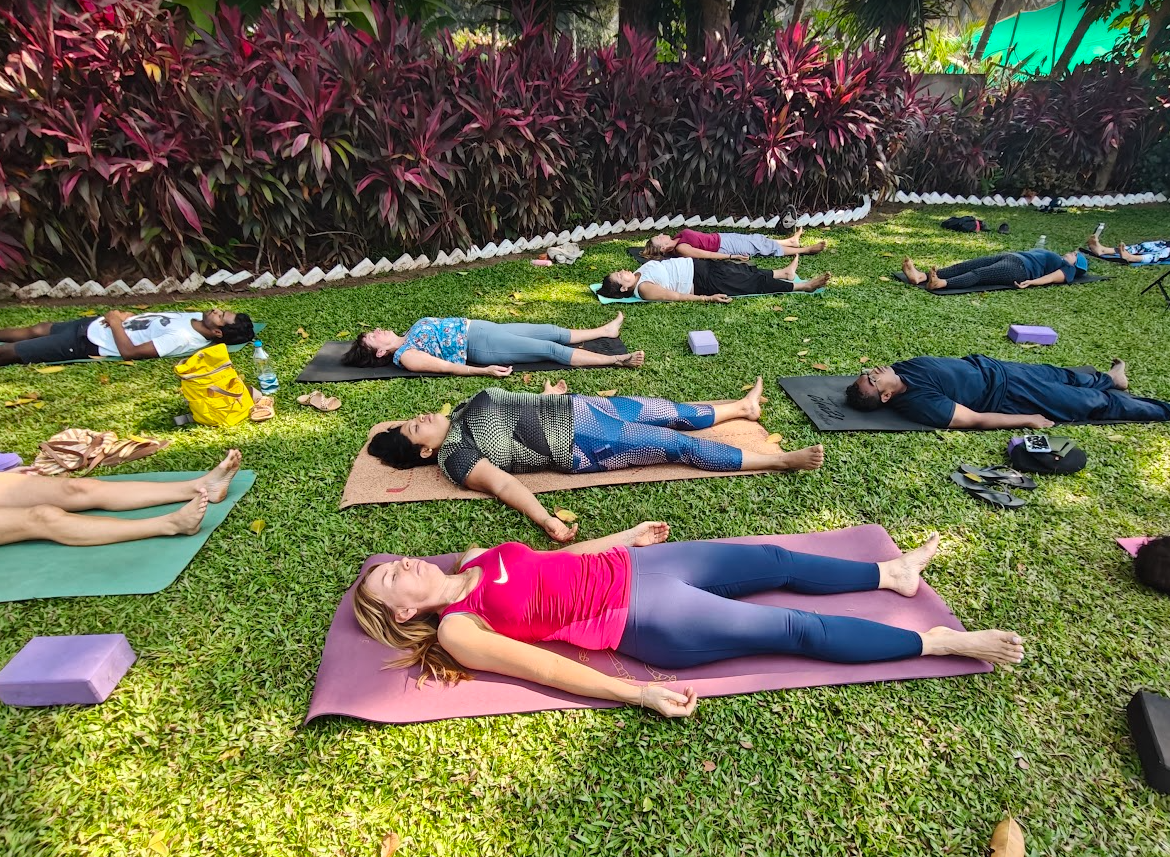
Neither is wrong. But if what you actually need is nervous system repair — the kind that sleep alone hasn't been fixing — you want soft fascination, not more stimulation. That's a South Goa job, most of the time.
Not sure if you're a stimulation-seeker or a rest-seeker by nature? Your dosha type is a decent shortcut.
Take the Dosha Quiz →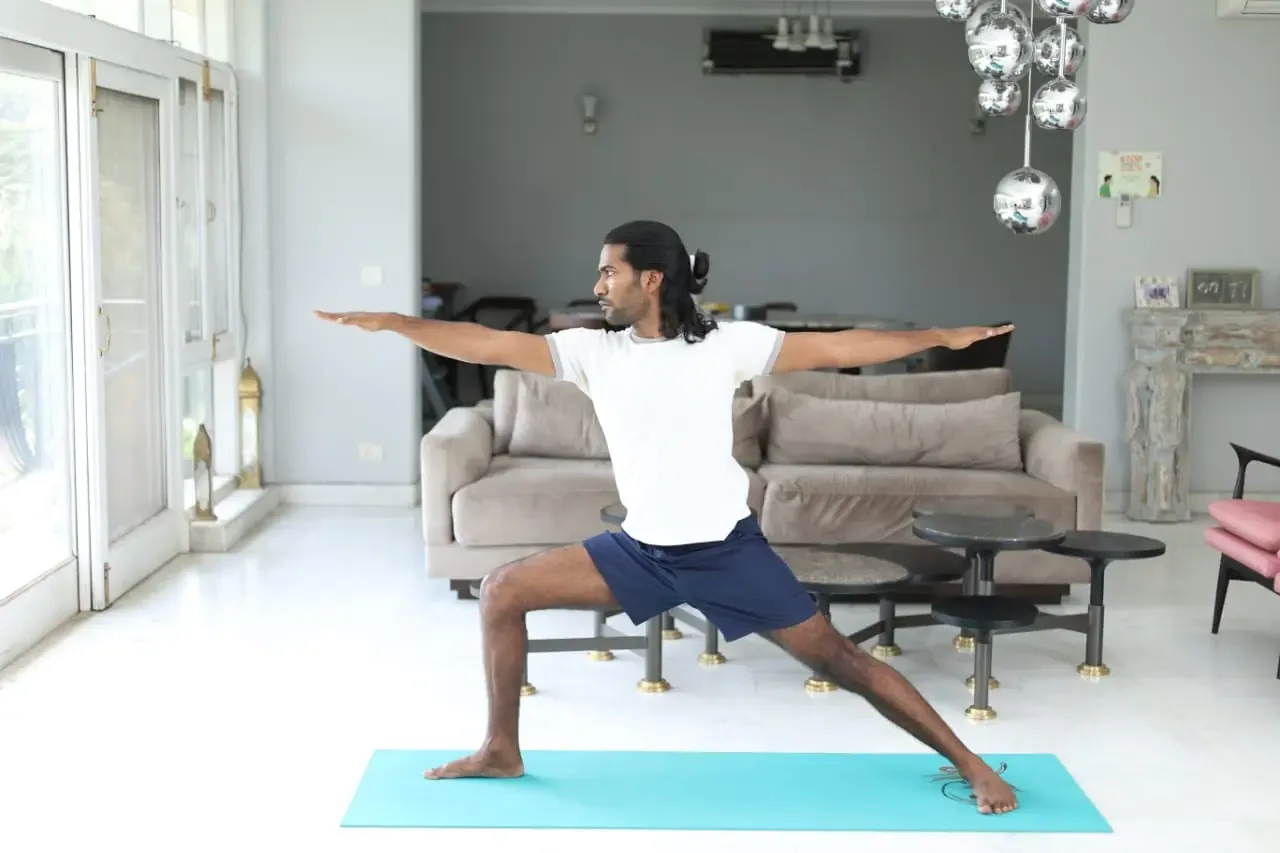
Side-by-Side: Which One Is Actually You
| North Goa | South Goa | |
|---|---|---|
| Pace | Fast, social, spontaneous | Slow, Susegado, unhurried |
| Best time to sleep | Whenever the party ends | Whenever your body asks |
| Class sizes | Larger, drop-in, high variety | Smaller, boutique, more 1:1 |
| Ideal for | First-timers, extroverts, explorers | Depleted nervous systems, deep practice |
| Nervous system state | Directed attention, mildly activated | Soft fascination, parasympathetic |
| Likely dosha match | Kapha types needing activation | Vata & Pitta types needing cooling |
| Signature sound | Music, traffic, market chatter | Waves, wind, the odd rooster |
If you want both — and plenty of my students do — the smart order is North first, South second. Stimulation, then integration. Doing it backwards just means you undo the rest you worked for.
What the Yoga Sutras Have to Do With Any of This
"Yogaś citta-vṛtti-nirodhaḥ"
— Yoga Sutras of Patanjali, 1.2
Translation: Yoga is the stilling of the fluctuations of the mind.
Not the stilling of your schedule. Not a beach. Not a playlist. The mind. You can absolutely find that stillness in North Goa — plenty of serious practitioners do, mid-chaos, because their practice is strong enough to hold steady anywhere. But if your practice is still young, or your nervous system is genuinely tired, chasing citta-vritti-nirodha in a place engineered for stimulation is like trying to meditate at a wedding. Possible. Not the easy path.
My mother, Suvina, has spent thirty years trying to get me organized. She has never once succeeded. But she did teach me, early, that the container matters as much as the effort inside it. Choose the container on purpose.
If South Goa sounds like your container, come find us. I teach regular hybrid classes with Rohit and Elaine at Silva Heritage — you can join in person or online, whichever your week allows. Find us here.
Both halves of Goa are real. Both are good at what they do. Just stop expecting a beach shack at 11pm to teach you the same lesson as a quiet lawn at 6am. They're different teachers.
DM me before you book. Tell me what you actually want to feel by the time you leave. I'll tell you which half of the state to pick.
Frequently Asked Questions
Is North Goa or South Goa better for a first yoga retreat?
Depends what "first" means to you. If you want variety, energy, and a social scene alongside your practice, North Goa gives you more options faster. If your priority is actually resting and going deep quickly, South Goa's quieter studios and smaller classes get you there with fewer distractions.
Is South Goa too quiet — will I get bored?
If you're used to constant stimulation, the first two days can feel strange — that's usually your nervous system recalibrating, not boredom. Most people who ask this question are exactly the people who need South Goa most.
Where exactly is La Waha located?
La Waha is based in the Aquamarina complex in Benaulim, South Goa, with regular hybrid classes at Silva Heritage — join in person or online with me, Rohit, or Elaine.
Can I do both North and South Goa in one trip?
Yes, and it's a genuinely good combination — just sequence it right. Start in North Goa for stimulation and exploration, then move South for integration and rest. Doing it in reverse tends to undo the calm you just built.
What's the best time of year for a Goa yoga trip?
November through February is the classic window — dry, warm, not too humid. December can get crowded and pricier, especially in North Goa. If quiet is the whole point of your trip, aim for January or early February in South Goa.