It was 3:47am on a Tuesday in Benaulim, and I was lying on my back calculating — in exquisite, obsessive detail — whether I had said something mildly awkward at a dinner party four years ago in Kolkata. The ceiling fan was on. The geckos were doing their thing. Tito was asleep, undisturbed by the fact that my brain had apparently decided to run a full retrospective audit of my entire social history since 2019.
This is anxiety's favourite trick. Not the dramatic kind with clutching-your-chest theatrics. The quiet, industrious, completely unbothered-by-your-need-for-sleep kind. The overthinking kind.
301 million people globally currently live with an anxiety disorder. That's not "feeling a bit stressed before a big meeting." That's clinical, relentless, physiologically measurable anxiety — and it doesn't include the sprawling grey zone of people who technically don't qualify for a diagnosis but also can't turn their brains off at 3:47am. After COVID, anxiety disorders spiked by 27.9% in a single year. One year.
And yet, the most powerful intervention we have — guided meditation for severe anxiety and overthinking — is still widely dismissed as something you do in a $150 Lululemon outfit while burning a candle that smells like "forest air." (Tito's ongoing theory: "Yoga pants are the greatest invention since the wheel." He's not entirely wrong, but that's beside the point.)
Let's actually talk about what's happening in your brain, and what to do about it.
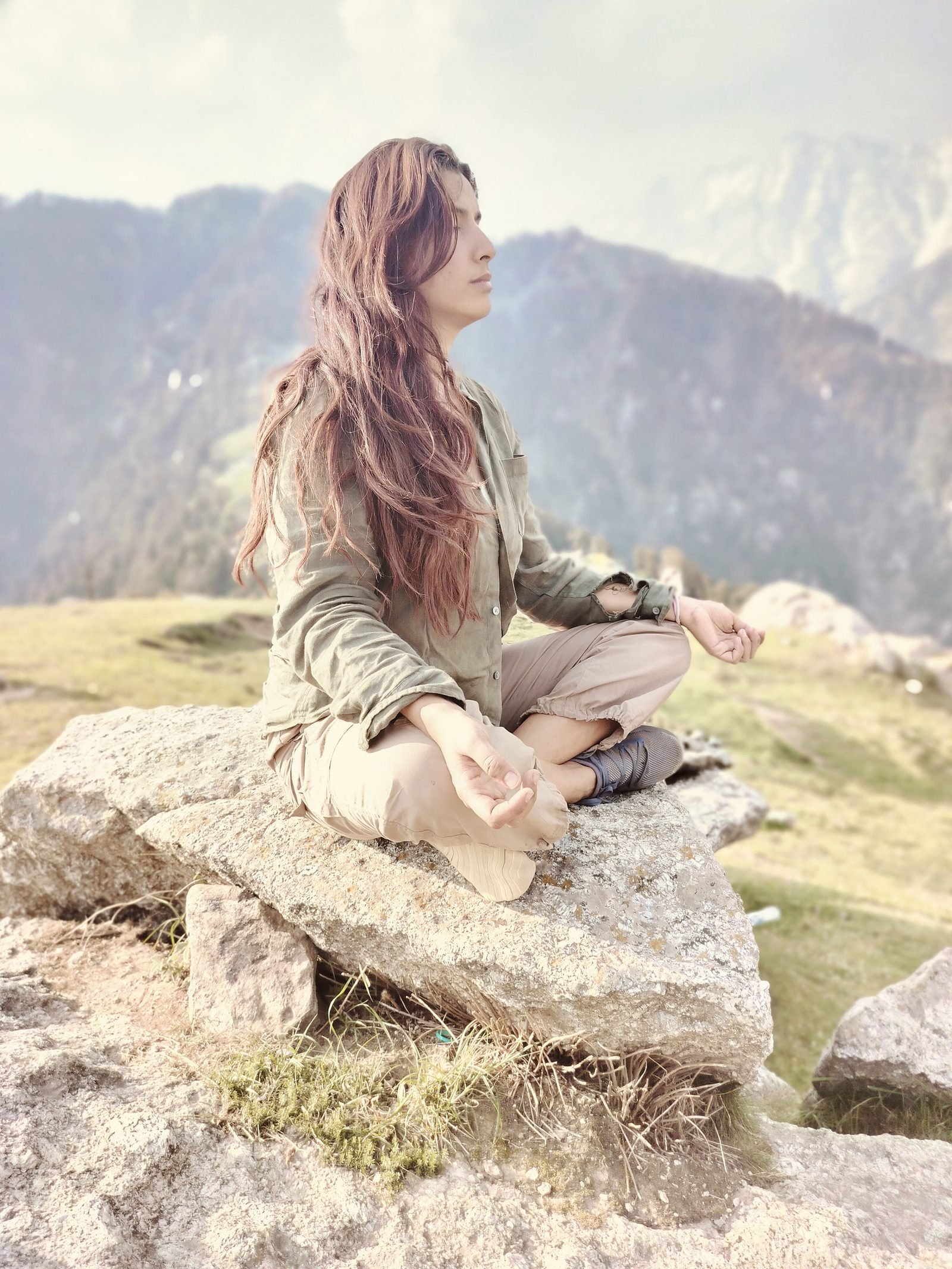
Your Brain Has a "Rumination Radio Station" — And Anxiety Cranks the Volume
Here's the neuroscience, and I'm going to give it to you properly, not in the watered-down "just breathe and be present" version.
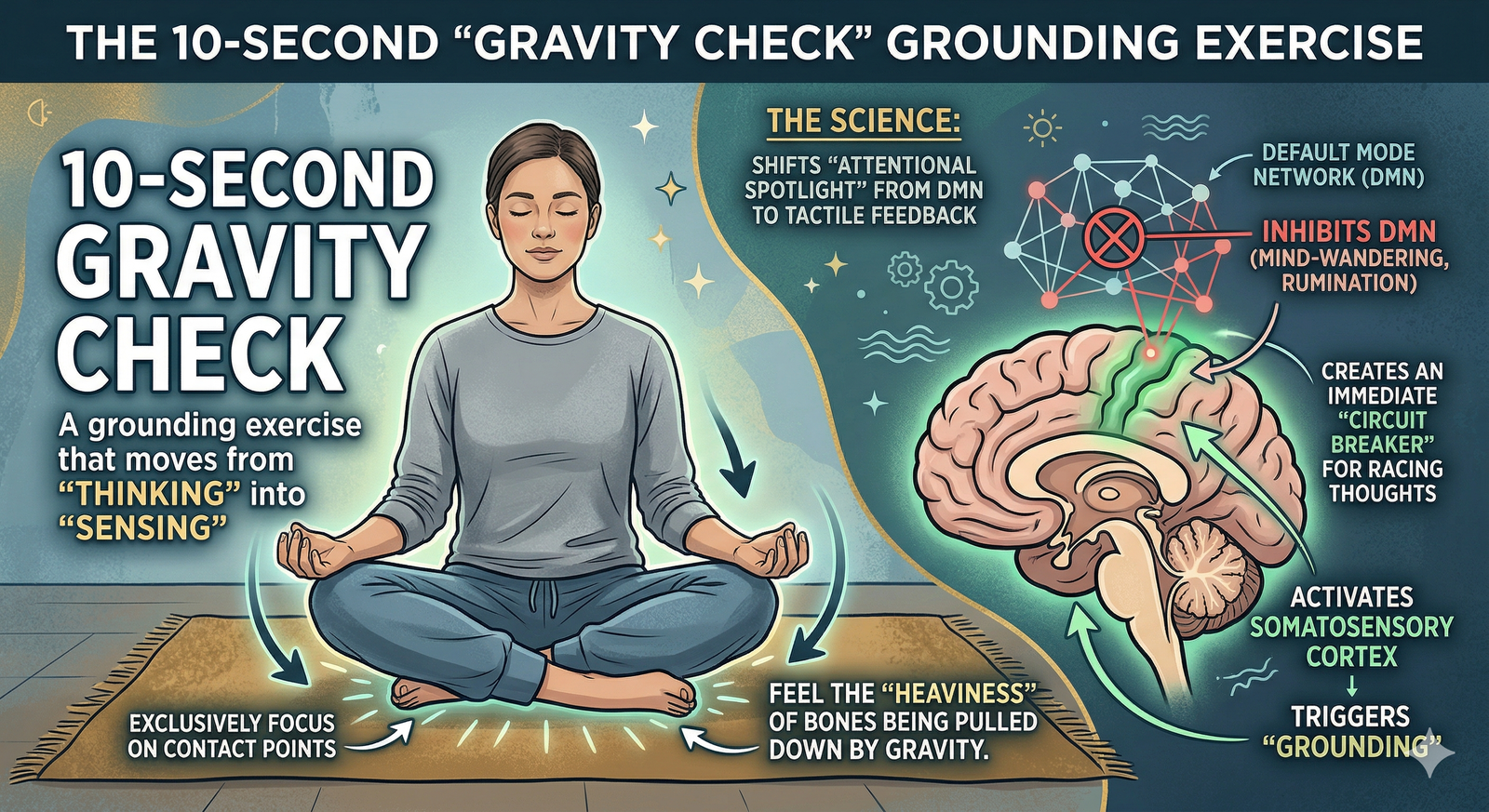
When you're not actively focused on a task, your brain defaults to something called the Default Mode Network (DMN) — a set of interconnected regions including the medial prefrontal cortex, the posterior cingulate cortex (PCC), and the hippocampus. The DMN is essentially your brain's background chatter: the mind-wandering, the daydreaming, the replaying of conversations, the projecting of futures that haven't happened yet.
In a healthy brain, the DMN hums along, has its moment, then quiets down when you redirect your attention. In an anxious brain? The DMN becomes a hostage situation. The posterior cingulate cortex and the amygdala — your brain's smoke alarm — get locked in hyperactive communication, creating persistent worry loops that scan for threats that, overwhelmingly, will never materialise.
Meanwhile, your ventromedial prefrontal cortex (vmPFC) — the part that's supposed to say "okay, the dinner party comment was fine, please let it go" — loses its grip on the amygdala. The top-down regulation breaks down. The smoke alarm keeps screaming.
Your overthinking isn't a personality flaw. It's a measurable, neurological pattern of your amygdala bullying your prefrontal cortex while the DMN plays the same track on repeat. You're not "just anxious." Your brain is stuck.
Here's the good news: guided meditation — specifically the kind that targets breath, body awareness, and focused attention — has been shown to do exactly what medication tries to do, but from the inside out. A landmark study reviewing over 200 mindfulness studies found it was particularly effective for anxiety and depression. More recently, researchers found that just 7 days of consistent meditation can begin to rewire brain activity, quieting the regions linked to that internal mental chatter. Seven days. That's not a retreat in an ashram in the mountains. That's a week.
I've personally been testing a 20-minute body scan + breath anchor protocol every morning for the last three months — yes, even on the days when Tito is making very loud espresso decisions in the kitchen at 6am — and the difference in my baseline anxiety is genuinely measurable.
The Emily in Paris Problem (Or: Why Your Brain Is Actually Just Bad at Narrative)
You know what show captures the physiology of overthinking better than any documentary? Emily in Paris. Emily takes a perfectly normal social situation, adds approximately forty-seven layers of interpretation, imagines seventeen possible outcomes, and then — bless her — acts on the most chaotic one. Every. Single. Episode.
This is your DMN on anxiety. It's not processing reality. It's writing elaborate fan fiction about reality, casting you as both the protagonist and the villain, and running it on loop from 3am to 6am.
The Ancient Greeks had a word for this — well, Patanjali had a word for it, which technically predates the Greeks and is considerably more precise:
"Yogas citta vritti nirodhah"
— Yoga Sutras of Patanjali, 1.2
Translation, casual version: Yoga is the settling of the mind's fluctuations. Or as I prefer to explain it to my students: yoga — and by extension, meditation — is the practice of turning off Emily's inner monologue.
Patanjali wasn't being metaphorical. He was describing, with remarkable accuracy, what 21st-century neuroscientists would later measure with fMRI machines: the mind has vrittis (fluctuations, spinning patterns), and the entire point of practice is to interrupt the spin. The DMN. The amygdala loop. The 3:47am ceiling-fan audit.

What Reddit Is Actually Saying (And Why It Matters)
I'll be honest: I spend more time than I should reading Reddit threads on meditation and anxiety. Not because I need validation, but because it's genuinely useful to hear what people are actually struggling with, not what the wellness industry wants them to struggle with.
The thread that keeps reappearing, in various forms: "I tried meditation for my anxiety and it made things WORSE — is this normal?"
Yes. It is normal. And it's important.
When you sit down for a guided meditation for severe anxiety and overthinking — especially for the first time — you're not turning down the volume on your brain. You're actually, for perhaps the first time, sitting in a quiet room with it. All the thoughts that your busyness was drowning out are suddenly very, very audible. This is not meditation failing. This is meditation working.
The other common thread: "I can't meditate because I can't stop thinking." This one makes me want to gently shake people. Meditation is not the absence of thoughts. If it were, I — a 37-year-old woman who has been doing this for over a decade and trained with the Art of Living — would have failed every single session. The practice is not having no thoughts. The practice is noticing you've drifted, and returning. That's it. That's the whole thing. Every return is a rep. You're training the vmPFC to pull the amygdala back on a leash.
The Protocol: Guided Meditation for Severe Anxiety and Overthinking (That Actually Works)
This is what I teach, and what I practice. It's not revolutionary. It's also not a vibe. It's a neurological intervention.
Step 1: Body Scan (5–7 minutes)
Start lying down or seated. Begin at the crown of your head and slowly move your awareness downward — not trying to relax anything, just noticing. Tight jaw? Note it. Tense shoulders? Note it. The act of noticing, without trying to fix, activates the interoceptive pathways (the insular cortex, specifically), which competes with the DMN for neural resources. You cannot fully ruminate and fully sense your body simultaneously.
Step 2: Breath Anchor with Physiological Sigh (5 minutes)
This is the protocol Andrew Huberman's lab at Stanford has done considerable work on. A double inhale through the nose (short inhale, then a second sharp top-up), followed by a long, slow exhale through the mouth. Do this 2–3 times, then let the breath normalise and simply follow it. The physiological sigh activates the parasympathetic nervous system — specifically, it stimulates the vagus nerve, which literally tells your heart rate to slow down and your amygdala to take a break.
You have a direct neurological off-switch for your stress response. It lives in your nose. You've been carrying it around your whole life.
For a great guided version of breath-based anxiety meditation, I recommend Dr. Andrew Huberman specifically on the physiological sigh and real-time stress relief: Huberman Lab on YouTube. It's the kind of content I wish I'd had when I was a stressed 22-year-old in Kolkata who thought "just don't think about it" was a viable mental health strategy.
Step 3: Open Awareness (5–8 minutes)
After anchoring the breath, expand your awareness outward — sounds, sensations, the quality of light behind your eyelids. You're not focusing on one thing. You're resting in wide, spacious awareness. This is the stage where the DMN actually quiets down most effectively, because you've moved from narrative (the story your mind is telling) to pure sensory experience.
This is also, incidentally, what NSDR (Non-Sleep Deep Rest) protocols leverage — if you want to understand the science of that, I've written about it here on La Waha (coming soon).
The Scale of This Thing
Let me put the 301 million anxiety figure in perspective, because I find that abstract numbers don't land properly.
301 million people with anxiety disorders is roughly the entire population of the United States — every single American, from New York to rural Wyoming — all experiencing clinically significant, life-disrupting anxiety. Simultaneously. That's before you count the hundreds of millions more in the grey zone: the overthinkers, the 3am ceiling-starters, the people who cancel plans because leaving the house felt like too much negotiation with their own nervous system.
And yet — only 1 in 4 of those people receive any treatment at all. That's not a mental health crisis. That's a mental health emergency dressed in business casual.
Guided meditation for severe anxiety and overthinking isn't a replacement for therapy or, in serious cases, medication. But it is something you can do tonight, alone, for free, that has measurable effects on the same neurological pathways that both therapy and medication target. The fact that it also doesn't require a prescription or a co-pay is apparently its most suspicious quality to most Westerners.
Before You Roll Your Eyes at the "Just Meditate" Advice
I hear you. I've heard the version of this advice that comes delivered with a side of crystals and a passive suggestion that your anxiety is a spiritual problem you could solve if you just wanted it enough. That version is, to use a technical term, rubbish.
But here's what's true: the research is clear. The practice is specific. The neurobiological mechanism is understood. Mindfulness-based interventions have been shown to increase connectivity between the vmPFC and the amygdala — the exact pathway that gives you back control over your own mental weather system.
My Dad — who is, inconveniently, both a lawyer and a yoga teacher, which means he wins every argument with citations from both case law AND the Bhagavad Gita — told me something when I was about nineteen and convinced that meditating was something other people did. He said: "The mind will argue against any practice that threatens its own supremacy."
He's annoyingly right. The part of you that says you can't meditate because you think too much is the exact part of you that needs the meditation most.
Start with ten minutes. Tomorrow morning, before you check your phone, before the mental inbox opens. Body scan, physiological sigh, open awareness. Do it for seven days. Then tell me your 3am ceiling fan doesn't look slightly less catastrophic.